Skip to content
ALL CAN
STEM!

STEM has no gender.Opportunity shouldn't either.

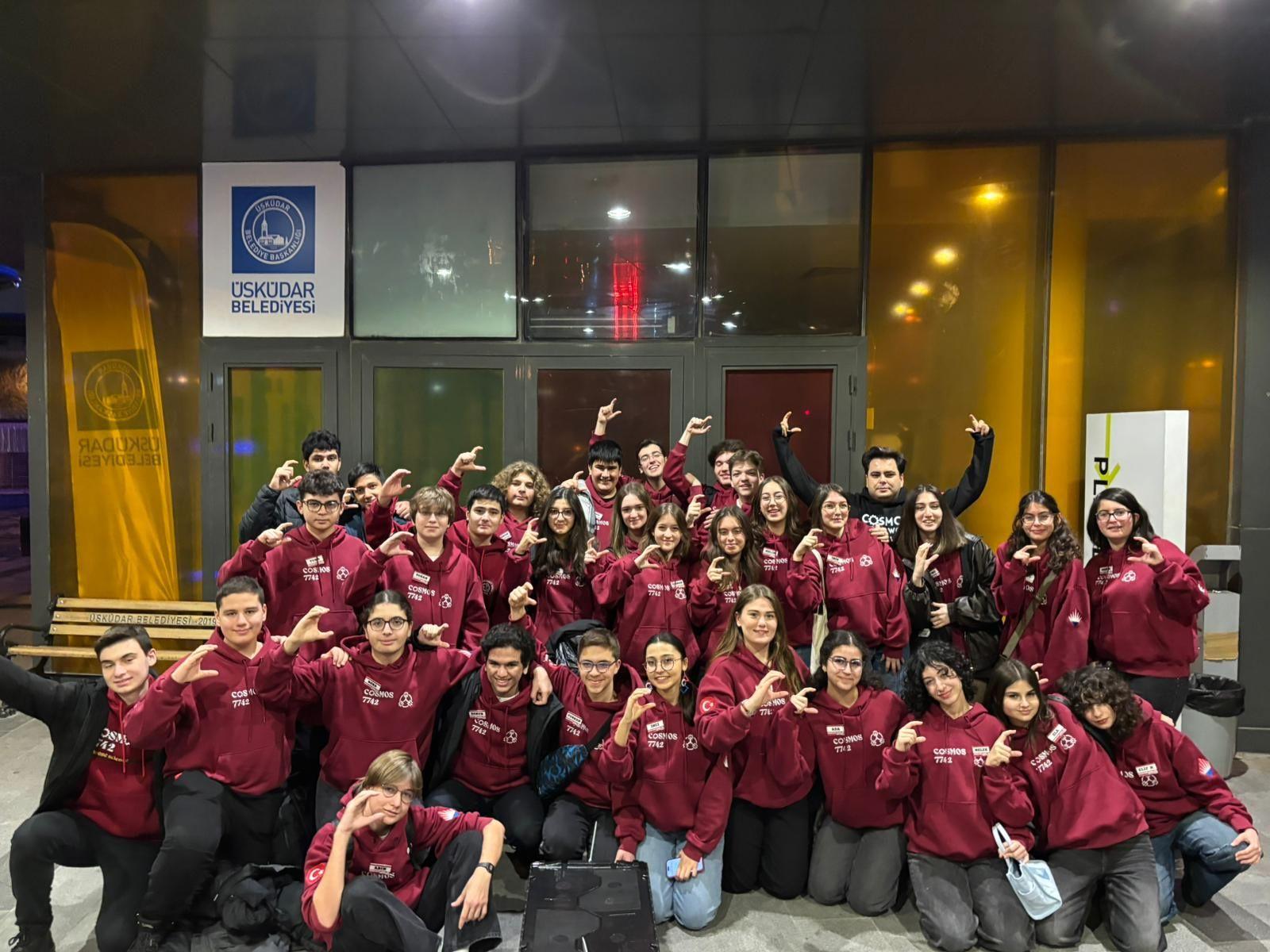
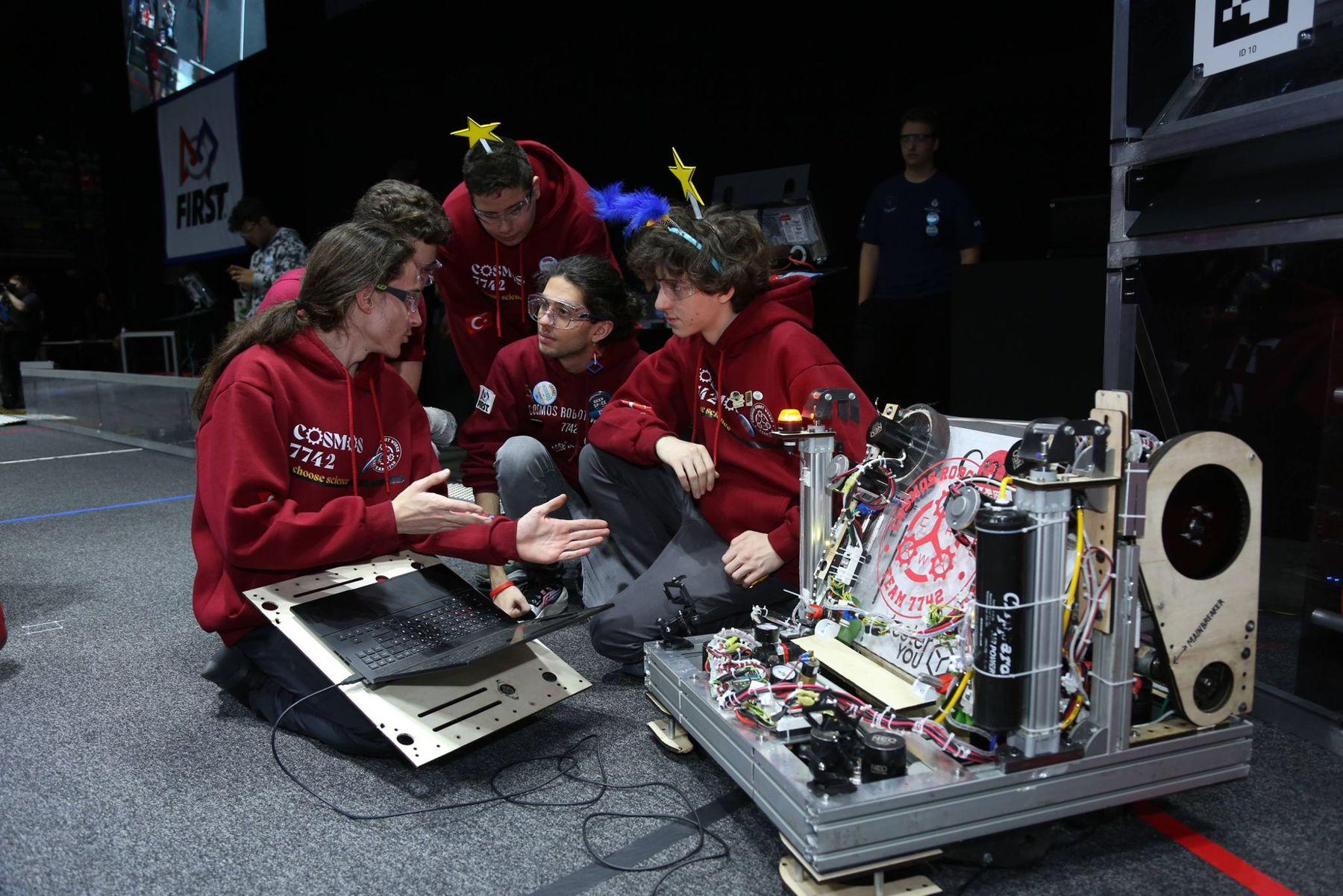
Cosmos Robot Works members working on their robot at a FIRST event

A global movement of FIRST teams working together to break barriers, amplify role models and make STEM accessible to everyone.

Initiated by Cosmos Robot Works — FRC #7742

So far

All figures are approximate. "People reached" counts attendance at sessions and events run by participating teams.

approximately FIRST teams
30
approximately countries
20
approximately people reached
4,000

More than a project. A global movement.

All Can STEM is a program run by FIRST robotics teams to make science, technology, engineering and mathematics open to everyone, especially girls and young people from disadvantaged backgrounds.

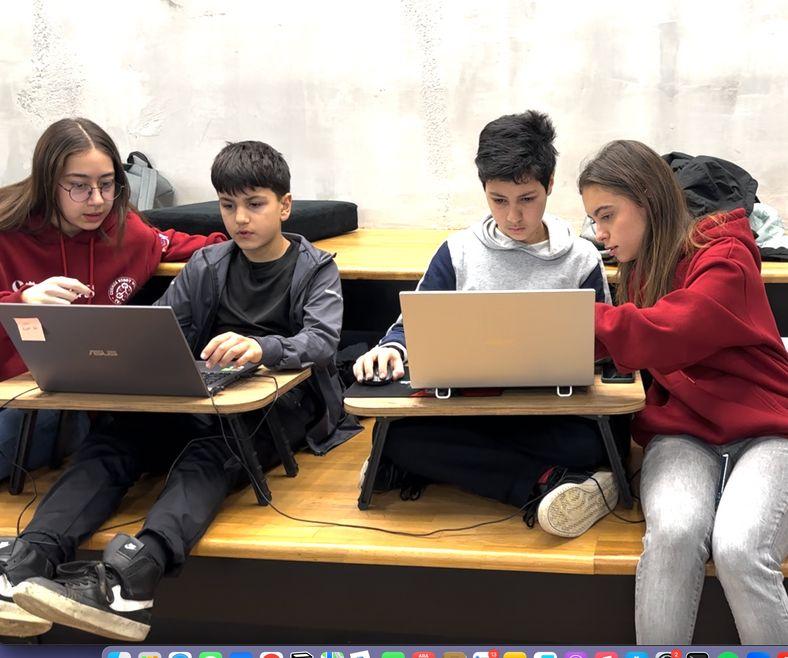
Team members and students coding together on laptops

Why it exists

Girls and young people from disadvantaged backgrounds are underrepresented in STEM, and many rarely meet a scientist or engineer who looks like them. Awareness alone does not change that. Teams need something concrete they can do.

What teams do

Every participating team learns about the issue, runs sessions in its own community and makes local role models visible. The program gives them the materials; the teams do the work.

Why it is international

FIRST teams exist in dozens of countries and already know how to work together. The same three steps are adapted to each language and culture, so one idea can travel across borders.

What makes it different

Most outreach is a single event. All Can STEM gives teams a repeatable method and permanent materials, so the work continues season after season.

Education

Teams learn the history and causes of inequality in STEM, then teach it to others.

Representation

Role models from many backgrounds, including people from each team's own community.

Collective action

Around thirty teams doing the same work at the same time, in their own places.

Mission

Reduce the social and cultural barriers in STEM, make role models visible and help FIRST teams take concrete action in their own communities.

Vision

A world where everyone, whatever their gender, income or background, has the chance to learn, create and grow in STEM.

Talent is everywhere. Opportunity is not.

Girls and young people from disadvantaged backgrounds are as capable in STEM as anyone else. Many still leave the field early. These are some of the reasons.

  1. 01

    Gender stereotypes

    Toys, media and everyday language still present science and engineering as subjects for boys.

  2. 02

    Social barriers

    Friends, classmates and teachers can make technical subjects feel like the wrong choice.

  3. 03

    Cultural barriers

    In some communities, family expectations point girls towards other careers.

  4. 04

    Few visible role models

    It is hard to picture yourself as an engineer if you have never met one like you.

  5. 05

    Unequal access to education

    Labs, equipment, clubs and trained teachers are not evenly spread between schools.

  6. 06

    Limited opportunities

    Competitions, mentoring and internships tend to reach students who already have support.

  7. 07

    Lack of encouragement

    Students are more likely to continue when an adult tells them they belong in STEM.

  8. 08

    Economic and geographic disadvantage

    Cost and distance keep many rural and low-income students out of STEM activities.

The gap in numbers

35%
of students enrolled in STEM-related fields of higher education are women.
UNESCO
2017
Scope
Global, higher education enrolment
Cracking the Code: Girls' and Women's Education in STEM (Open source)
33.3%
of researchers worldwide are women.
UNESCO
2021
Scope
Global, researchers (headcount)
UNESCO Science Report: The Race Against Time for Smarter Development (Open source)
29.2%
of the STEM workforce is made up of women.
World Economic Forum
2023
Scope
146 economies, STEM workforce
Global Gender Gap Report 2023 (Open source)

None of these barriers is fixed. Each one points to something a team can do: teach, encourage, and show who already works in STEM. That is where All Can STEM starts.

Three actions. One global movement.

Every team follows the same three steps. Each step has its own material.

Learn

The Booklet

A 12-page booklet that teams study before they teach anyone else. It stays with the team as a reference for new members.

  • What STEM equity means
  • Role model stories
  • The barriers and where they come from
  • The history of the issue
  • Practical steps for change
Read the booklet (PDF)
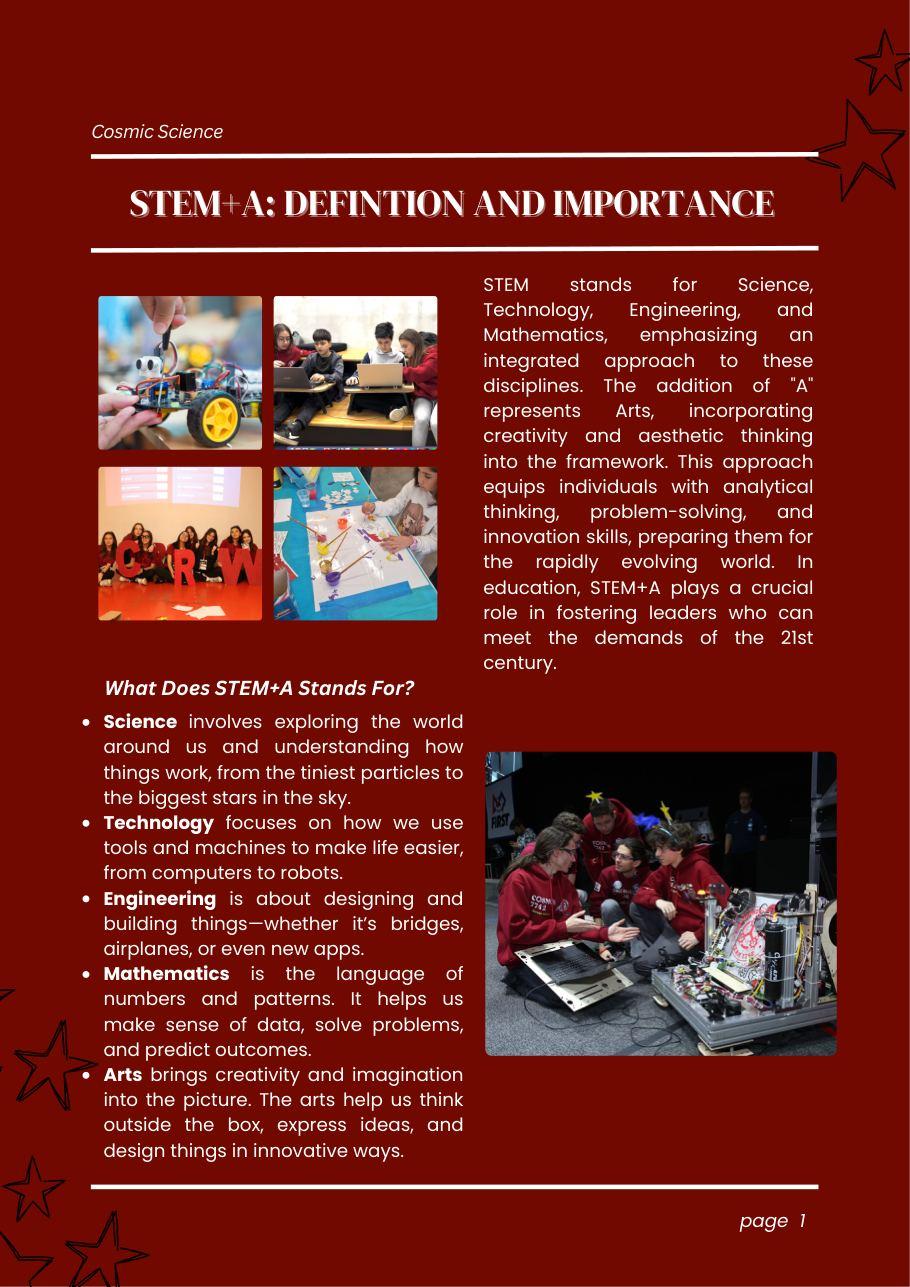
Booklet page: STEM+A definition and importance
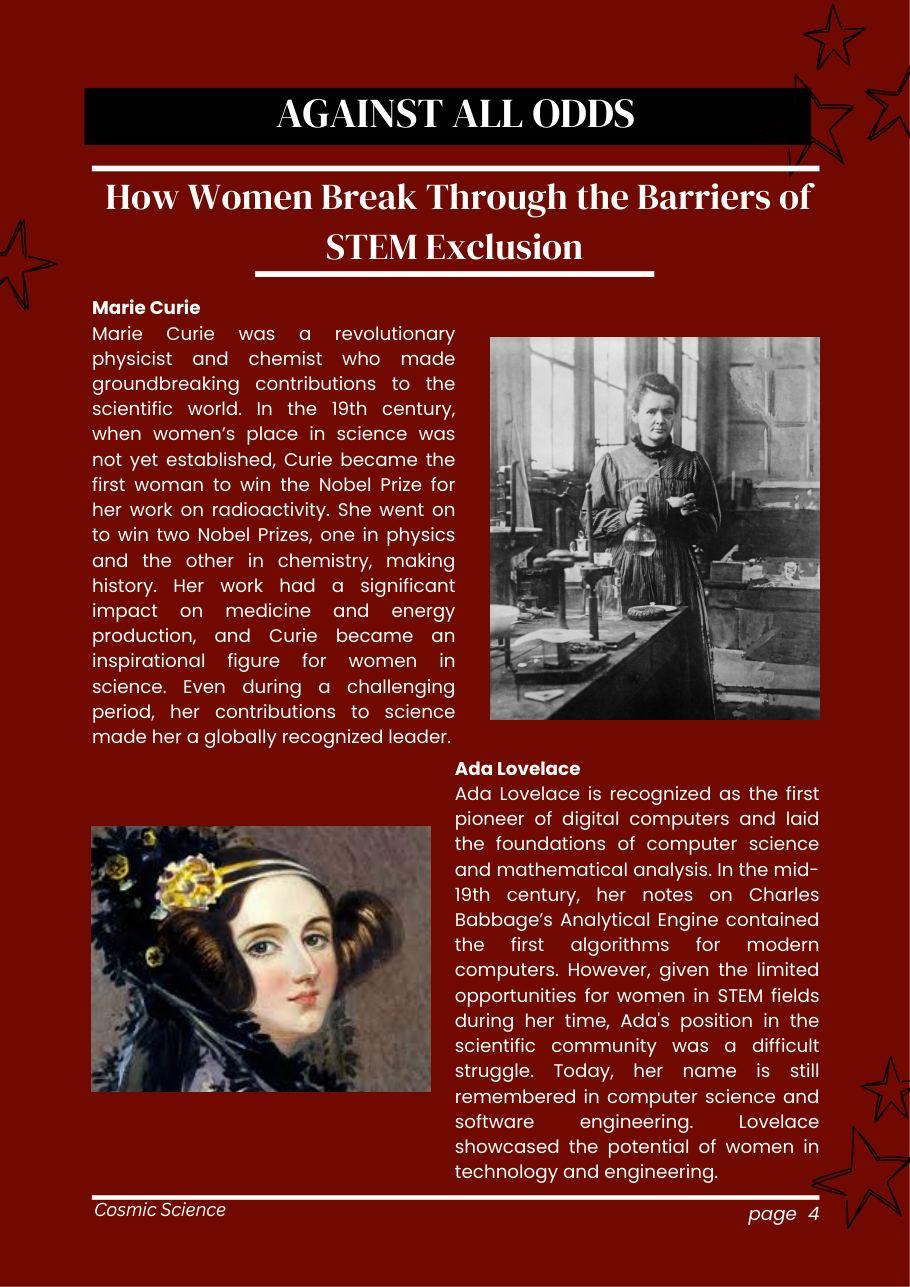
Booklet page: how women break through the barriers of STEM exclusion
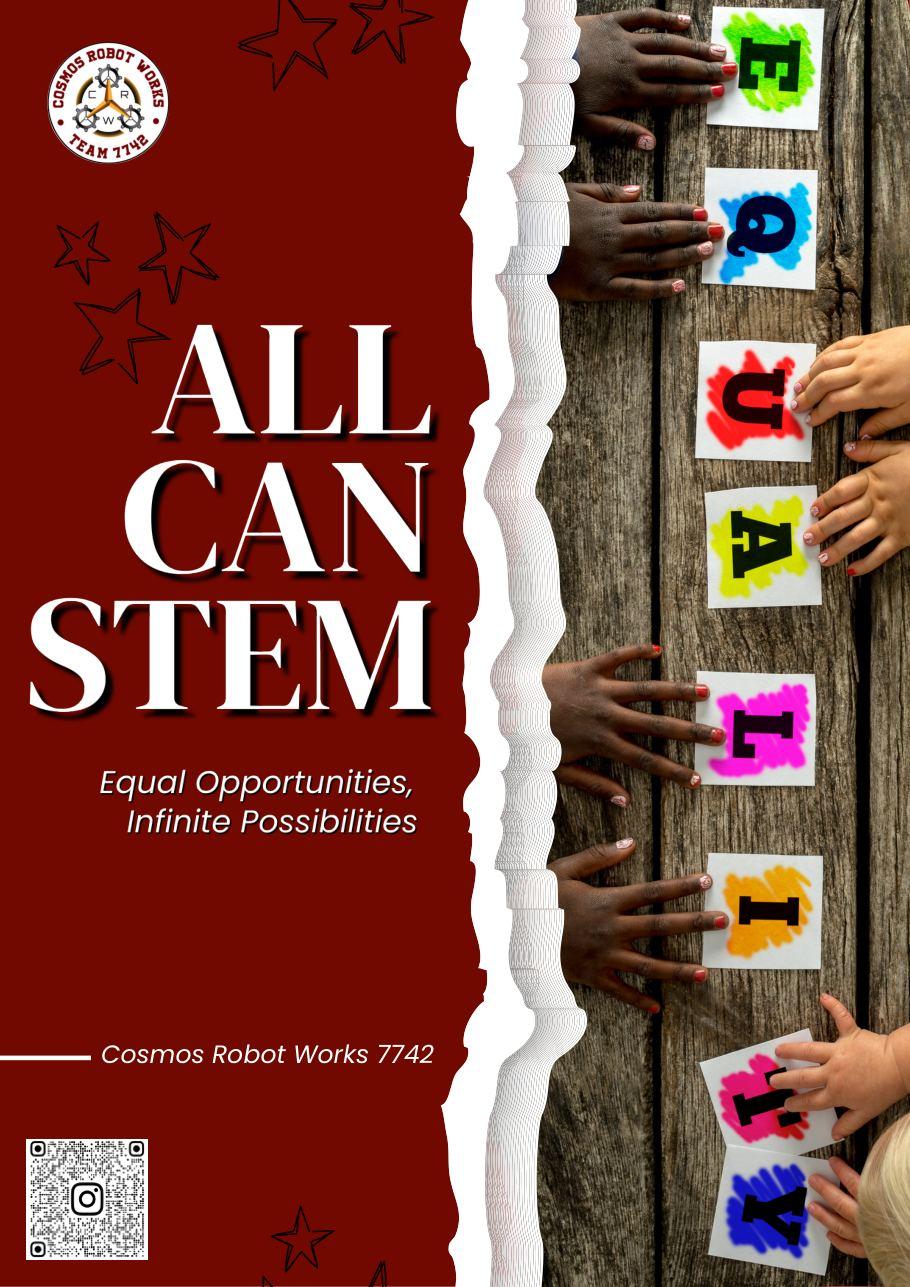
Cover of the All Can STEM booklet
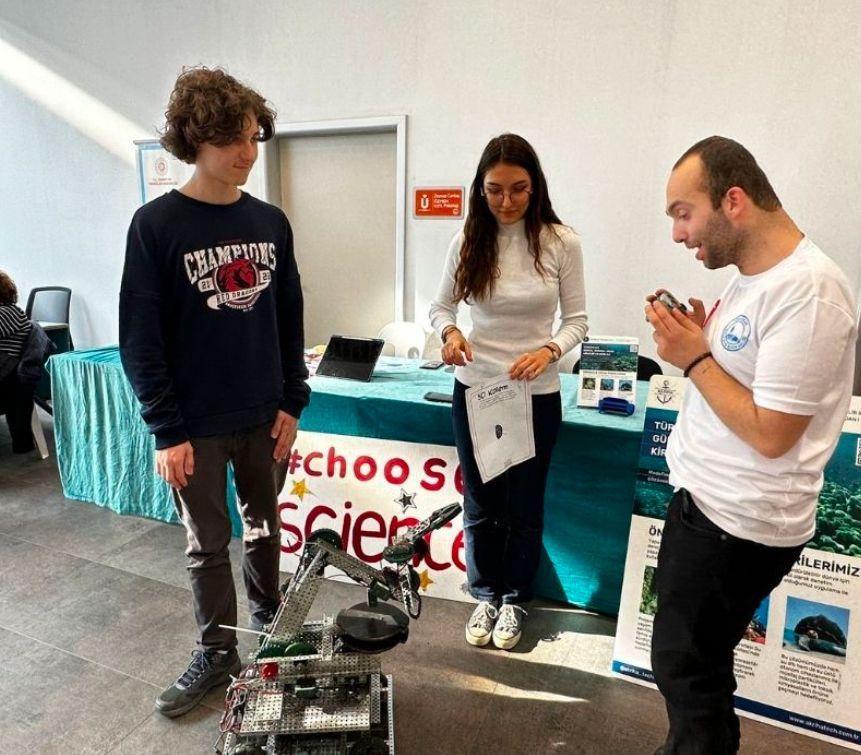
Team members presenting a robot at a science outreach stand

Teach

The Presentation

Teams run sessions with a shared, editable presentation. They translate it and add local examples, so the message fits each audience.

  • Sessions in schools, workplaces and events
  • Adapted to local language and needs
  • Introduces students to STEM opportunities
  • Opens a discussion about social barriers

Inspire

The Role Model Board

Teams pick inspiring people from their own community and present them on posters and boards, using shared templates.

Makes local role models visible

Shows a range of STEM careers

Puts real stories in everyday spaces

Helps young people picture themselves in STEM

Learn. Teach. Inspire.

Small actions. Global change.

The program grows by passing the same work from one group to the next.

  1. 01

    Cosmos Robot Works

    Starts the program and prepares the shared materials.

  2. 02

    FIRST teams

    Around 30 teams in around 20 countries take up the model.

  3. 03

    Local communities

    Each team runs sessions and puts up boards where it lives.

  4. 04

    Future innovators

    Young people meet role models and see a place for themselves in STEM.

How the collaboration works

  • Done
  • In progress
  • Goal
  1. 01

    Contacting FIRST teams

    Done

  2. 02

    Training meetings on STEM equity

    Done

  3. 03

    Sharing the materials

    Done

  4. 04

    Sessions in local communities

    Done

  5. 05

    Choosing local role models

    Done

  6. 06

    Building Role Model Boards

    Done

  7. 07

    International role model meetings

    In progress

  8. 08

    Reaching underserved communities

    In progress

  9. 09

    Turning local work into global impact

    Goal

One movement. Across borders.

Teams on several continents run the same program in their own languages.

FIRST teams
~30
countries
~20
people reached
~4,000

The map shows global reach in general. Participating countries will be marked once the confirmed list is published.

You can't be what you can't see.

When young people see someone like them succeed in STEM, the question changes from "Could I?" to "Why not me?" These scientists and engineers show what that looks like.

They appear here as sources of inspiration. They are not participants in, or supporters of, All Can STEM.

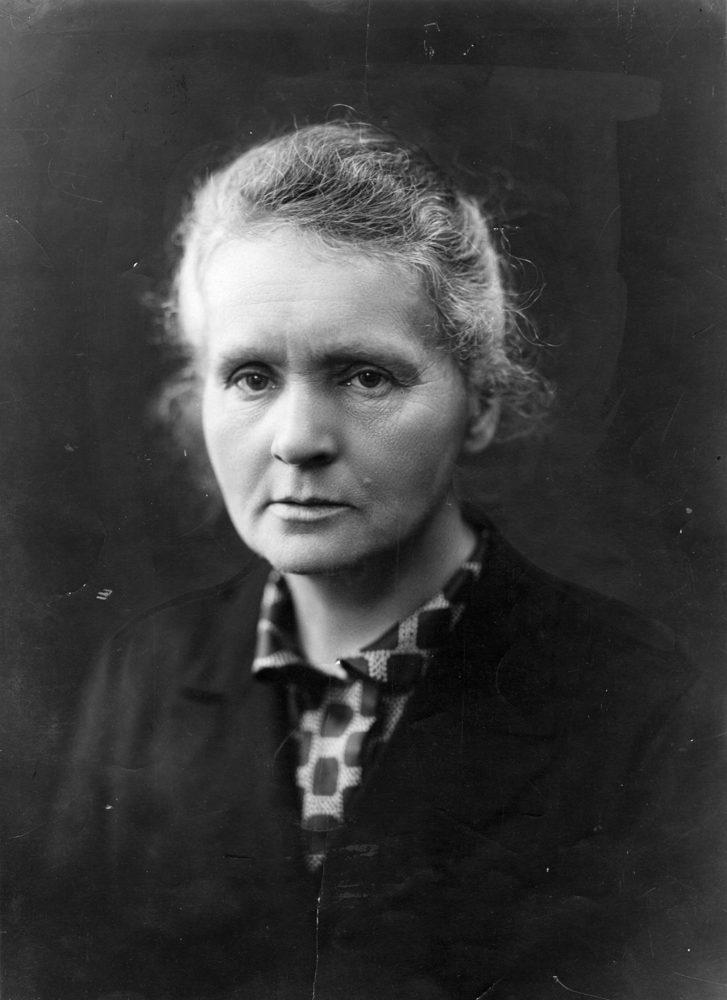
  • Portrait of Marie Curie

    Marie Curie

    1867–1934

    Physics & chemistry

    Nobel Prizes in Physics (1903) and Chemistry (1911)

    Born in Warsaw, she studied in Paris at a time when few universities admitted women. Her research on radioactivity led to the discovery of polonium and radium.

    The first person to win Nobel Prizes in two different sciences.

    Source: NobelPrize.org
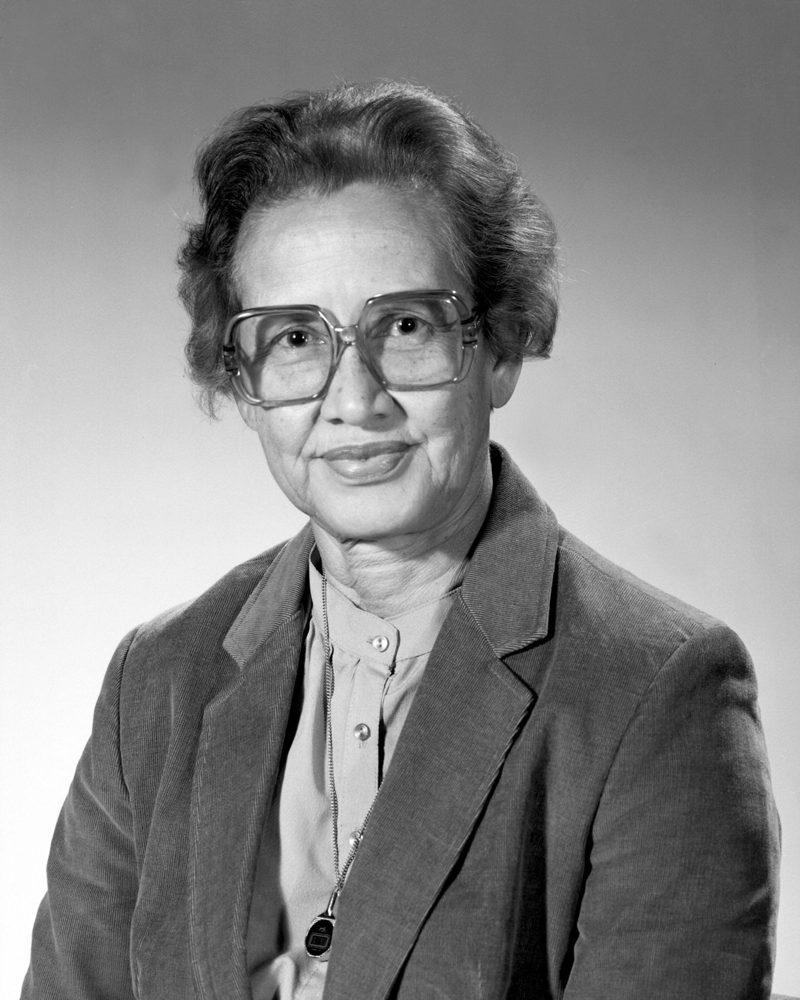
  • Portrait of Katherine Johnson

    Katherine Johnson

    1918–2020

    Mathematics

    Trajectory calculations for NASA's early crewed flights

    A NASA mathematician whose calculations supported Alan Shepard's flight, John Glenn's orbit and Apollo 11, during years of racial segregation in the United States.

    Glenn asked for her to check the computer's numbers before his flight.

    Source: NASA
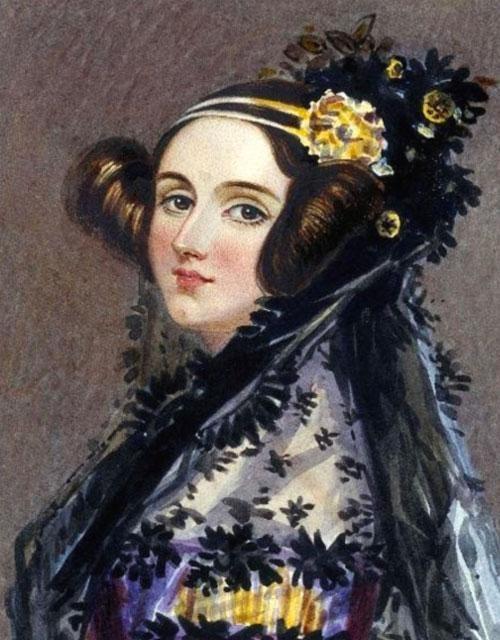
  • Portrait of Ada Lovelace

    Ada Lovelace

    1815–1852

    Mathematics & computing

    Notes on the Analytical Engine (1843)

    Working with Charles Babbage, she published notes that include a method for calculating Bernoulli numbers on his Analytical Engine, often described as the first published computer program.

    She saw that a computing machine could work with more than numbers.

    Source: Science Museum
  • Portrait of Hedy Lamarr

    Hedy Lamarr

    1914–2000

    Invention

    Co-patented frequency hopping (1942)

    A film actor who, with composer George Antheil, patented a frequency-hopping system to protect radio-guided torpedoes from jamming.

    Her work was recognised decades later, as spread-spectrum radio became common.

    Source: National Inventors Hall of Fame
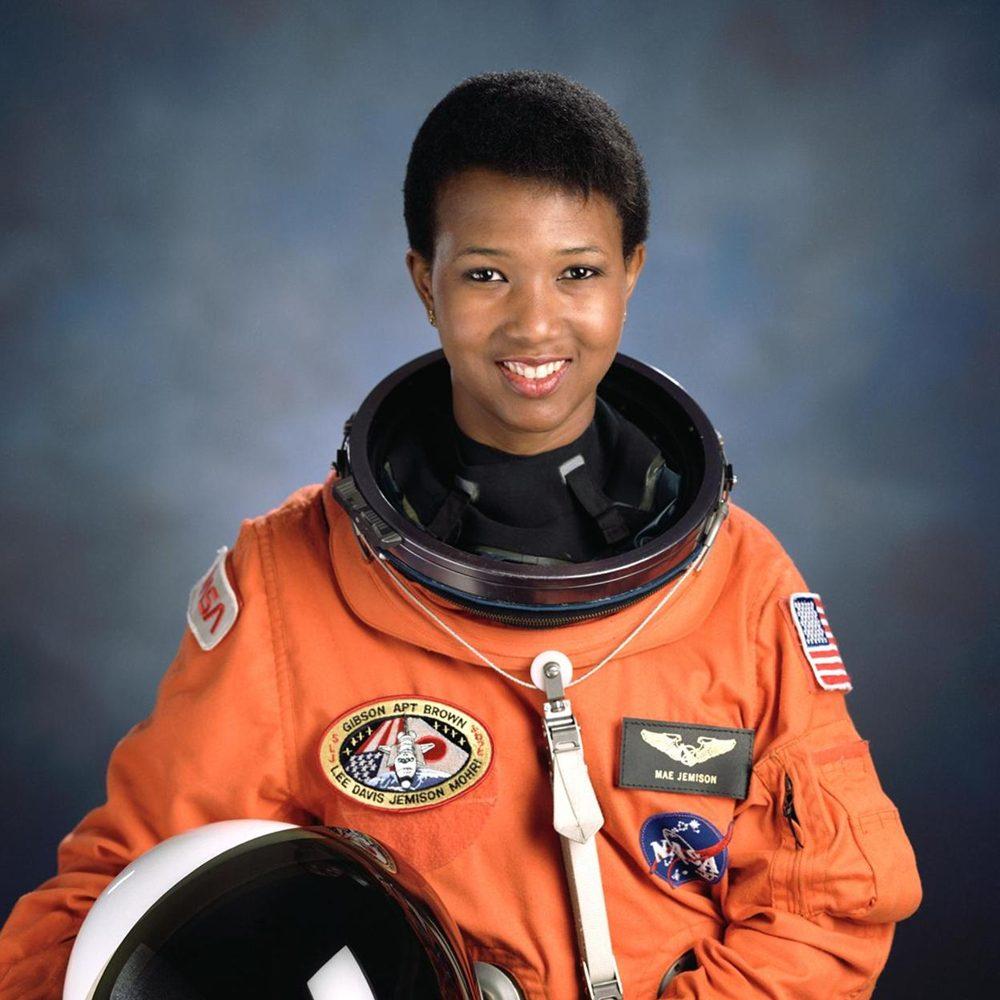
  • Portrait of Mae Jemison

    Mae Jemison

    1956–

    Engineering, medicine & spaceflight

    First African American woman in space (1992)

    A chemical engineer and physician who served in the Peace Corps before joining NASA and flying on Space Shuttle Endeavour.

    She has spent decades promoting science education for young people.

    Source: NASA
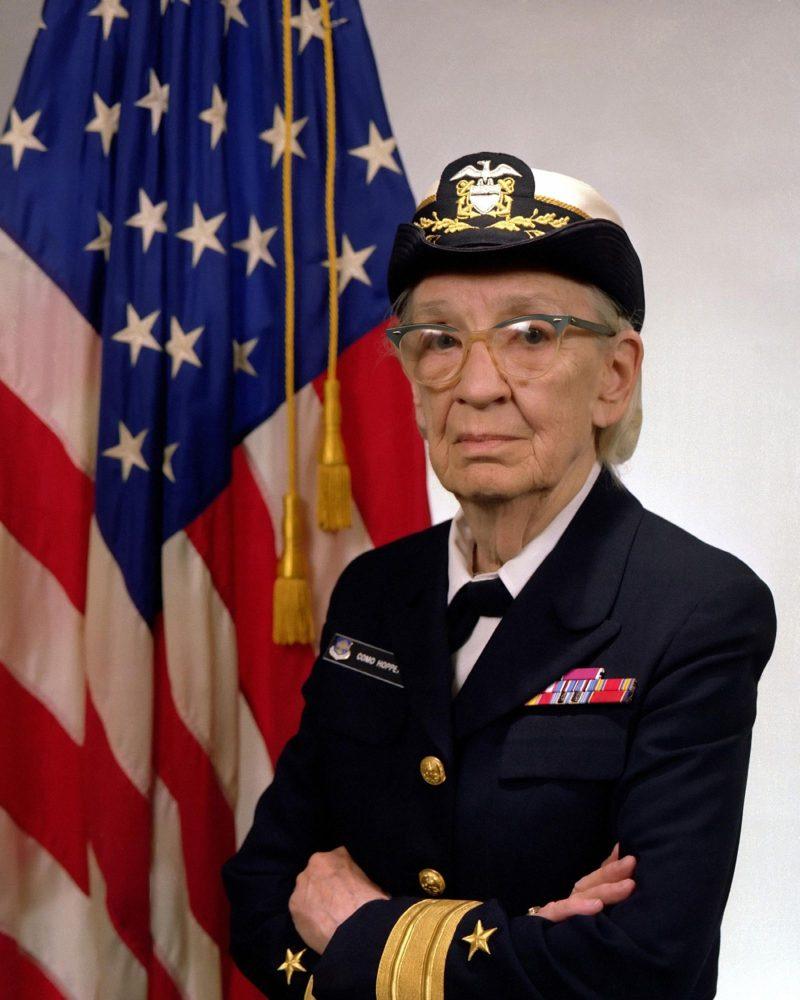
  • Portrait of Grace Hopper

    Grace Hopper

    1906–1992

    Computer science

    Early compilers and the groundwork for COBOL

    A mathematician and US Navy rear admiral who argued that programs should be written in words people can read, not only in machine code.

    She kept teaching and mentoring young programmers throughout her career.

    Source: Yale University
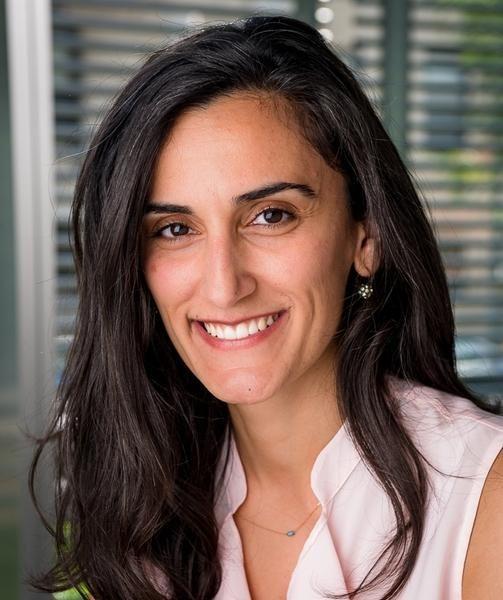
  • Portrait of Canan Dağdeviren

    Canan Dağdeviren

    1985–

    Materials science

    Flexible, skin-conformable devices for health

    Born in Istanbul, she studied at Hacettepe University and the University of Illinois, and now leads the Conformable Decoders group at the MIT Media Lab.

    Her lab builds wearable devices aimed at early disease detection.

    Source: MIT Media Lab
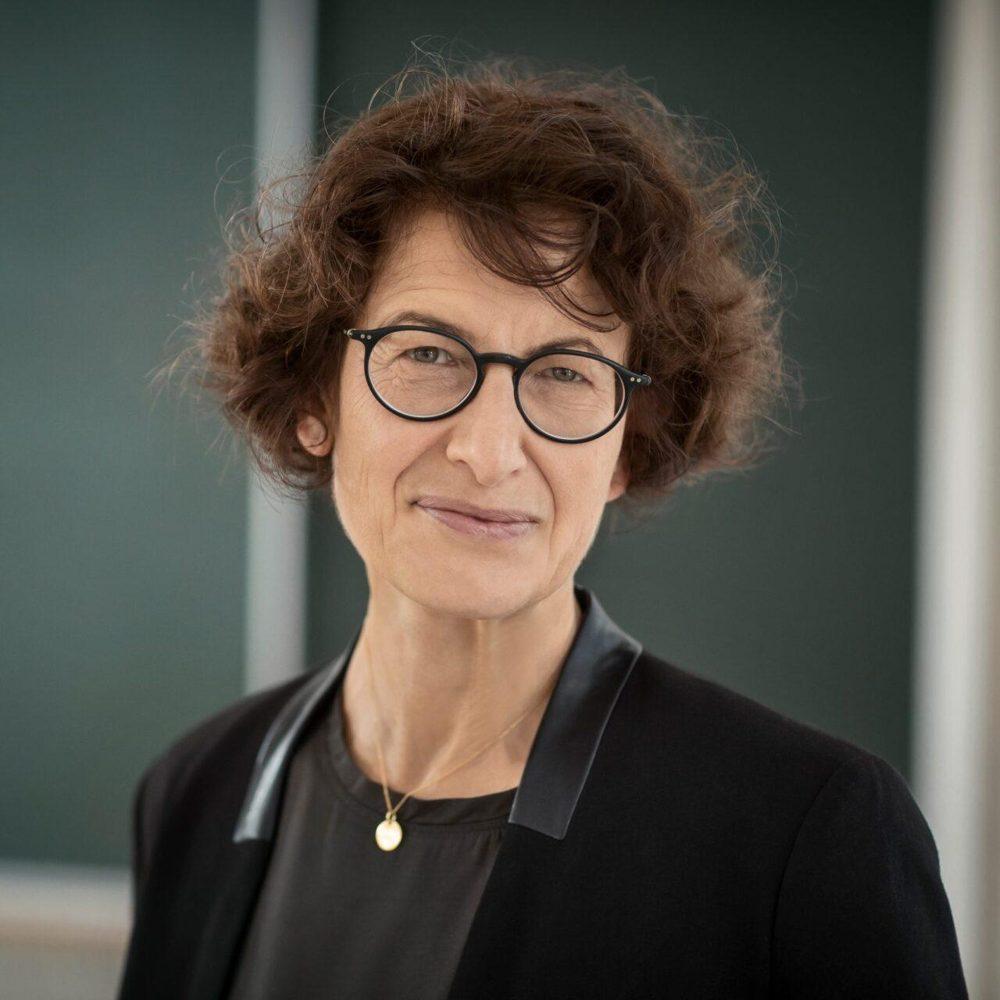
  • Portrait of Özlem Türeci

    Özlem Türeci

    1967–

    Medicine & immunology

    Co-developed the first approved mRNA COVID-19 vaccine

    A physician and co-founder of BioNTech, where she works on immunotherapies for cancer and infectious diseases.

    Her team's research reached people in more than 100 countries.

    Source: BioNTech

The role model next door

Famous scientists can feel far away. An engineer from your own town, a doctor who went to your school or a programmer who speaks your language makes the path real: someone you could meet and ask questions.

That is why every All Can STEM team makes a Role Model Board about people from its own community.

The tools behind the movement.

Three materials, shared with every participating team.

01

All Can STEM Booklet

The shared knowledge base of the program.

Open PDF
How teams use it
Teams read it together before their first session, then keep it as a reference for training new members.
For
Team members, teachers, mentors
Format
12-page PDF, English
All Can STEM Booklet, page cover
All Can STEM Booklet, page 2
All Can STEM Booklet, page 3
All Can STEM Booklet, page 4

02

All Can STEM Presentation

The tool teams use to run their own sessions.

Shared directly with participating teams

How teams use it
Teams translate and adapt the slides, add local examples and present them at schools, workplaces and community events.
For
Students, families, local communities
Format
Editable slide deck

03

Role Model Board Templates

The format for showing local role models.

Shared directly with participating teams

How teams use it
Teams choose people from their own community, fill in the templates and display the boards in schools and public spaces.
For
Schools, libraries, community centres
Format
Poster templates

MoreThanRobots.

A FIRST season is about building a robot. It is also about the people who build it, and the community around them.

Collaboration
Teams across countries share one method and learn from each other.
Gracious Professionalism
Competing hard while helping others succeed, a core FIRST value.
Community impact
Sessions and boards reach people far outside the robotics lab.
STEM accessibility
Bringing STEM to students who have had the least access to it.
Leadership
Students plan and lead the sessions themselves.
Representation
Showing many kinds of people doing science and engineering.

All Can STEM is an independent initiative started by Cosmos Robot Works. It is not run, funded or endorsed by FIRST®.

Cosmos Robot Works team members

Founder of All Can STEM

Cosmos Robot Works logo

Cosmos Robot Works

Cosmos Robot Works is FIRST Robotics Competition Team #7742 from Türkiye. The team started All Can STEM, wrote its first materials and coordinates the collaboration between teams.

The program itself belongs to every team that runs it.

Program
FIRST Robotics Competition
Team
#7742
Country
Türkiye
cosmosrobotworks.org

Different people.Equal opportunities.One global movement.

ALL CAN STEM!